
Perimeter Security for Commercial Properties: 10 Proven Ways to Stop Intruders Before They Reach Your Building
When many business owners think about perimeter security, they picture a chain-link fence surrounding their property. While fences are an important first layer of protection, they rarely stop determined criminals.
Today’s security threats require more than physical barriers. Theft, vandalism, trespassing, and unauthorized access often begin long before someone reaches your building. The most effective security strategies focus on detecting suspicious activity at the property line—not after someone has already gained access.
Whether you manage a warehouse, office building, retail center, industrial facility, healthcare campus, distribution center, or construction site, a layered perimeter security strategy can help reduce risk, improve response times, and better protect your people and property.
Why Perimeter Security Matters
Your property’s perimeter is your first opportunity to detect suspicious activity.
Once someone reaches your building, valuable time has already been lost.
Effective commercial perimeter security helps businesses:
- Deter criminal activity
- Detect unauthorized entry
- Protect employees and visitors
- Reduce theft and vandalism
- Improve emergency response
- Protect vehicles and equipment
- Reduce liability
- Improve overall site awareness
The earlier suspicious activity is detected, the more options there are to respond before damage or theft occurs.
Why Fences Alone Aren’t Enough
Fences create boundaries, but they don’t tell you when someone climbs over them.
Likewise, locked gates don’t identify suspicious behavior, verify a threat, or alert someone when unauthorized access occurs.
Modern criminals often exploit gaps such as:
- Remote corners of a property
- Poor lighting
- Blind spots
- Unmonitored gates
- Loading docks
- Rear entrances
- Equipment yards
- Vacant areas
Without surveillance or monitoring, businesses may not discover a security breach until after damage has already occurred.
10 Proven Perimeter Security Best Practices
1. Start with a Physical Barrier
Fencing remains an important part of perimeter security.
Depending on your facility, barriers may include:
- Chain-link fencing
- Ornamental fencing
- Security gates
- Bollards
- Concrete barriers
- Vehicle gates
These features help define property boundaries and discourage unauthorized entry.
However, they should be considered only the first layer of protection.
2. Monitor the Entire Perimeter with Cameras
Perimeter cameras should provide continuous visibility around the property.
Common locations include:
- Property entrances
- Gates
- Parking lots
- Fence lines
- Equipment yards
- Building corners
- Loading docks
Modern perimeter surveillance systems provide high-definition video, remote viewing, analytics, and searchable recordings.
Proper camera placement eliminates blind spots while improving situational awareness.
3. Use Proactive Video Monitoring
Recording an incident is valuable.
Stopping one is even better.
Proactive Video Monitoring combines AI-powered analytics with live monitoring specialists who verify suspicious activity in real time.
Depending on the situation, live operators may:
- Issue live voice-down warnings
- Notify designated contacts
- Escalate verified threats
- Coordinate with law enforcement when appropriate
This proactive approach helps deter trespassers before they reach your building.
4. Improve Exterior Lighting
Lighting remains one of the simplest ways to improve perimeter security.
Well-lit properties make it easier for:
- Cameras to capture useful images
- Employees to identify suspicious activity
- Visitors to move safely
- Criminals to feel exposed
Lighting should cover:
- Fence lines
- Parking lots
- Walkways
- Gates
- Loading docks
- Rear entrances
5. Secure Vehicle Access Points
Many commercial properties focus on pedestrian access but overlook vehicle entry.
Vehicle gates should include:
- Controlled access
- Cameras
- License plate recognition when appropriate
- Intercom systems
- Remote management
Vehicle entrances are often among the busiest—and highest-risk—areas on a property.
6. Protect Outdoor Assets
Many businesses store valuable assets outside.
Examples include:
- Equipment
- Service vehicles
- Trailers
- Shipping containers
- HVAC equipment
- Fuel tanks
- Construction materials
Outdoor assets should be covered by surveillance, adequate lighting, and proactive monitoring.
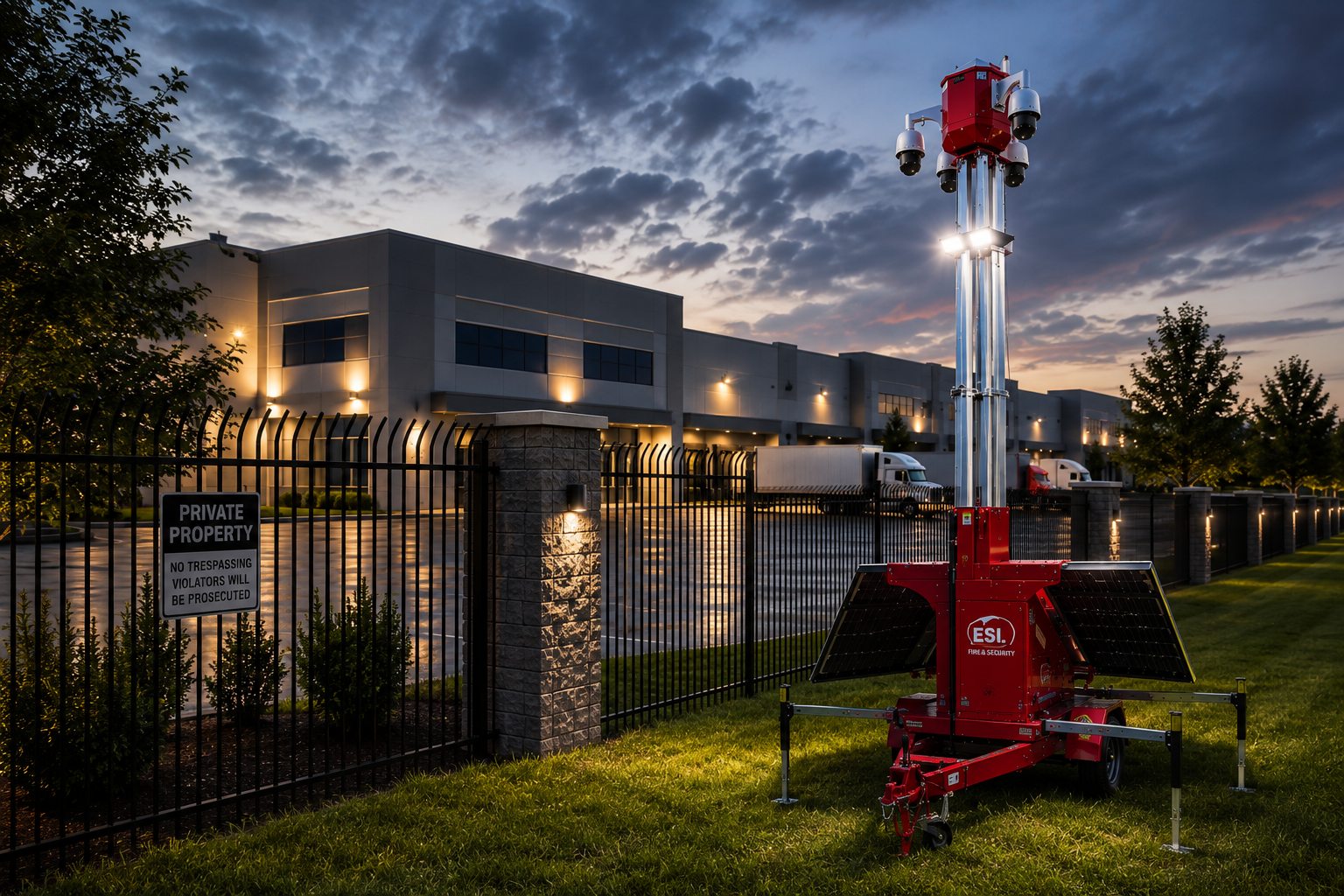
7. Deploy Mobile Security Trailers for Large Properties
Large commercial properties often have areas where permanent cameras aren’t practical.
Mobile Security Trailers provide flexible perimeter protection by offering:
- Elevated camera coverage
- Solar-powered operation
- Rapid deployment
- AI analytics
- Remote connectivity
- Proactive Video Monitoring
They work especially well for:
- Construction projects
- Vacant properties
- Industrial sites
- Distribution centers
- Equipment yards
- Temporary security needs
8. Integrate Access Control with Perimeter Security
Perimeter security doesn’t stop at the fence.
Once someone reaches the building, access control becomes the next layer of defense.
Commercial access control systems help organizations:
- Restrict entry
- Track activity
- Secure sensitive areas
- Manage employee credentials
- Quickly revoke access when needed
Integrating access control with surveillance creates greater visibility across the entire property.
9. Conduct Routine Perimeter Inspections
Properties change over time.
Regular inspections help identify:
- Damaged fencing
- Camera blind spots
- Burned-out lighting
- Broken gates
- Overgrown landscaping
- New vulnerabilities
Routine maintenance ensures security systems continue performing as intended.
10. Use a Layered Security Strategy
No single technology can protect an entire property.
The strongest perimeter security systems combine multiple technologies, including:
- Video Surveillance
- Access Control
- Intrusion Detection
- Proactive Video Monitoring
- Mobile Security Trailers
- Exterior Lighting
- Physical Barriers
Each layer works together to improve visibility, detection, and response.
Businesses That Benefit from Strong Perimeter Security
Almost every commercial property benefits from improved perimeter protection.
Examples include:
- Office Buildings
- Warehouses
- Distribution Centers
- Manufacturing Facilities
- Retail Centers
- Healthcare Facilities
- Schools
- Construction Sites
- Utility Facilities
- Equipment Yards
- Parking Garages
- Municipal Properties
Each property presents unique challenges, making customized security planning essential.
Ready to strengthen your perimeter security? Contact ESI Fire & Security today to schedule a security assessment and discover the right solution for your property.
ESI Fire & Security Protection is one of three Honeywell Platinum dealers in Texas and is backed by over 25 years of industry experience. As leaders in the industry, we provide cutting-edge solutions for complete security and fire protection, including Mobile Security Trailers. Our team is dedicated to delivering top-tier solutions tailored to meet your needs, ensuring peace of mind for businesses across Texas and its surrounding regions. Contact us today to see how ESI Fire & Security can help enhance your perimeter security at your organization.
Frequently Asked Questions
Perimeter security refers to the systems, technologies, and physical barriers used to protect the outer boundary of a property from unauthorized access, theft, trespassing, and vandalism.
While fences create a physical barrier, they cannot detect suspicious activity or alert security personnel when someone climbs over or breaches the perimeter. Modern perimeter security combines fencing with surveillance, monitoring, lighting, and access control.
Effective perimeter security systems often include video surveillance, Proactive Video Monitoring, access control, intrusion detection, security lighting, and Mobile Security Trailers for large or temporary sites.
Proactive Video Monitoring uses AI-powered analytics and live monitoring specialists to detect suspicious activity in real time. Operators can verify threats, issue live audio warnings, and help stop incidents before they escalate.
Warehouses, distribution centers, office buildings, manufacturing facilities, retail centers, schools, healthcare campuses, utility sites, and construction projects all benefit from strong perimeter security.
Yes. Mobile Security Trailers provide rapidly deployable surveillance, elevated camera coverage, solar power, and proactive monitoring, making them ideal for parking lots, construction sites, equipment yards, and large commercial properties.