
Vacant Property Security: 9 Proven Ways to Prevent Trespassing, Theft & Vandalism
A commercial property doesn’t stop being valuable when it becomes vacant. In many cases, it becomes more vulnerable.
An empty office building, retail center, warehouse, industrial facility, construction project, or commercial property may still contain valuable equipment, copper wiring, HVAC systems, building materials, and other assets. At the same time, fewer employees and visitors are present to notice suspicious activity.
That combination can make vacant properties attractive targets for trespassing, theft, vandalism, illegal dumping, and other unwanted activity.
Effective vacant property security requires more than locking the doors and checking the building occasionally. Property owners need a strategy that secures access points, maintains visibility, detects suspicious activity, and provides a way to respond when no one is routinely on-site.
Here are nine ways to better protect a vacant commercial property.
Why Are Vacant Properties Security Risks?
Occupied buildings benefit from something vacant properties often lack: people.
Employees, customers, maintenance personnel, security teams, and tenants naturally create activity and visibility. When those people disappear, suspicious behavior may go unnoticed for longer periods.
The U.S. Fire Administration specifically recommends that vacant properties be monitored, secured, and regularly inspected. It also notes that unsecured vacant and abandoned structures can attract illicit activity and unauthorized occupants.
Common vacant property risks include:
- Trespassing
- Vandalism
- Copper and metal theft
- HVAC equipment theft
- Equipment and material theft
- Illegal dumping
- Unauthorized occupancy
- Property damage
- Arson and fire
- Vehicle theft
- Graffiti
The longer a property remains visibly unoccupied and unmonitored, the more important an effective security plan becomes.
9 Proven Ways to Improve Vacant Property Security
1. Secure Every Entry Point
The first step is preventing easy access.
Inspect all:
- Exterior doors
- Windows
- Loading docks
- Roof access points
- Gates
- Service entrances
- Garage doors
- Utility access areas
Damaged locks, broken windows, doors that don’t latch properly, and gaps in perimeter fencing should be addressed immediately.
The U.S. Fire Administration emphasizes keeping unauthorized occupants out and recommends securing vacant structures as an important measure for reducing fire and criminal activity.
Don’t assume that locking the main entrance means the property is secure. Criminals often look for less visible entry points around the rear or sides of a building.
2. Install Video Surveillance
Security cameras provide visibility when employees or tenants aren’t there to watch the property.
Cameras should be strategically positioned around:
- Building entrances
- Parking areas
- Loading docks
- Fence lines
- Equipment areas
- Rear entrances
- Utility areas
- Exterior storage
- High-value assets
For larger commercial properties, camera placement should be based on actual vulnerabilities rather than simply installing cameras wherever mounting locations are convenient.
The objective is to eliminate blind spots and provide useful coverage of areas where unauthorized activity is most likely to occur.
3. Use Proactive Video Monitoring
Recording a trespasser is useful for an investigation.
Identifying the trespasser while they’re still on the property can be much more valuable.
Proactive Video Monitoring combines video surveillance and analytics with trained monitoring specialists who can evaluate suspicious activity in real time.
Depending on the event and established protocols, intervention can include:
- Live audio warnings
- Customer notifications
- Escalation of verified activity
- Law enforcement notification when appropriate
For a vacant property where no employees are routinely present, this can provide an important layer between detecting suspicious activity and responding to it.
Instead of discovering broken doors, missing equipment, or vandalism during the next property inspection, monitoring can help identify activity as it develops.
4. Protect HVAC Systems, Copper & Other High-Value Assets
Thieves don’t necessarily need to enter the building to create significant losses.
Exterior HVAC units, copper components, wiring, generators, equipment, and other materials can be attractive targets.
Property owners should identify valuable assets that remain on-site and determine whether additional protection is needed.
Options may include:
- Surveillance coverage
- Physical barriers
- Locked equipment enclosures
- Improved lighting
- Intrusion detection
- Proactive monitoring
This is especially important when a property will remain vacant for an extended period.
5. Improve Exterior Lighting & Visibility
Dark areas provide concealment.
Maintain adequate lighting around:
- Entrances
- Parking lots
- Loading docks
- Building corners
- Walkways
- Equipment areas
- Fence lines
Landscaping should also be maintained so trees, shrubs, or overgrowth don’t obstruct camera views or create hiding areas near windows and entrances.
The U.S. Fire Administration recommends exterior lighting and clearing vegetation that obstructs views as part of property protection against intentionally set fires.
A property that looks maintained and monitored can also present a very different appearance from one that looks forgotten.
6. Use Intrusion Detection
Video surveillance provides visual information, while intrusion detection can provide another layer of protection for doors, windows, and other critical areas.
Depending on the facility, an intrusion detection system may include:
- Door contacts
- Motion detection
- Glass-break detection
- Perimeter sensors
- Alarm monitoring
When combined with video surveillance, an alarm event can provide additional context for determining what is happening at the property.
Rather than relying on one technology, layered systems provide multiple opportunities to identify unauthorized activity.
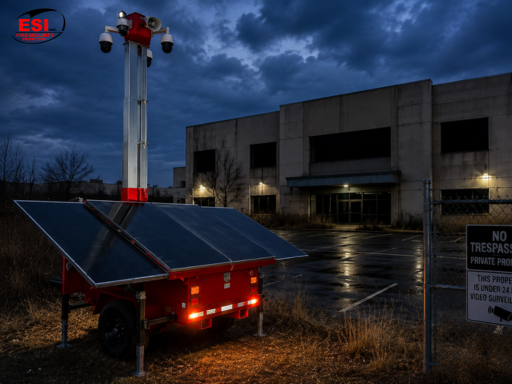
7. Deploy Mobile Security Trailers
Some vacant properties are difficult or expensive to secure with permanent infrastructure.
This is where Mobile Security Trailers can be particularly effective.
They can provide:
- Elevated camera coverage
- Solar-powered operation
- Battery backup
- Remote connectivity
- AI-powered analytics
- Proactive Video Monitoring
- Live audio intervention
- Recorded video
- Rapid deployment
Because they don’t require permanent installation, Mobile Security Trailers can be deployed where coverage is needed and relocated as site conditions change.
This makes them especially useful for:
- Vacant commercial buildings
- Large parking lots
- Industrial properties
- Equipment yards
- Properties awaiting redevelopment
- Construction projects
- Remote facilities
- Temporary closures
Their physical presence also creates a highly visible security deterrent.
How Do You Secure a Vacant Property Without Power or Internet?
This is one of the biggest challenges property owners can face.
A building may have had utilities disconnected, or existing internet service may no longer be available after the previous tenant leaves.
That doesn’t mean the property has to remain unmonitored.
Solar-powered Mobile Security Trailers can provide surveillance without relying on the vacant building’s electrical infrastructure. Battery systems maintain operation, while cellular connectivity can support remote access and monitoring.
Depending on the site and configuration, other connectivity options may also be available.
This makes mobile surveillance particularly valuable for properties where installing permanent cameras, trenching cable, restoring utilities, or establishing traditional internet service isn’t practical.
Rather than investing in permanent infrastructure for a temporarily vacant property, owners can deploy security where it’s needed and relocate the equipment when circumstances change.
8. Inspect the Property Regularly
Technology should not eliminate physical property inspections.
Regular inspections can identify:
- Forced-entry attempts
- Damaged fencing
- Broken locks
- Water leaks
- Vandalism
- Camera obstructions
- Lighting failures
- Signs of unauthorized occupancy
- Fire hazards
- Property deterioration
The U.S. Fire Administration specifically recommends monitoring and inspecting vacant buildings, noting that conditions can change and security measures should be evaluated during inspections.
Documenting inspections can also help property managers track recurring problems and identify areas that require additional security.
9. Make the Property Look Monitored & Maintained
A visibly neglected property can signal opportunity.
Even when a building is vacant:
- Maintain landscaping
- Remove trash
- Repair damaged fencing
- Replace broken lights
- Remove graffiti
- Keep signage maintained
- Secure doors and windows promptly
- Avoid obvious signs of long-term neglect
Visible security measures can reinforce that message.
Cameras, monitored areas, lighting, controlled gates, and Mobile Security Trailers all communicate that the property isn’t simply being ignored.
Vacant Property Security Systems: What Do You Really Need?
There isn’t one solution that’s appropriate for every vacant property.
A small office building may require a very different security strategy from a 500,000-square-foot warehouse, industrial facility, or multi-building commercial development.
A layered vacant property security system may include:
Video Surveillance
Provides visual coverage and recorded evidence of activity around the property.
Proactive Video Monitoring
Adds real-time review and potential intervention when suspicious activity is detected.
Intrusion Detection
Helps identify unauthorized access through doors, windows, and protected areas.
Access Control
Can restrict access to authorized property managers, contractors, maintenance teams, and other personnel who still require building entry.
Mobile Security Trailers
Provide flexible, rapidly deployable surveillance for properties where permanent systems, electricity, or internet connectivity may not be practical.
The right combination depends on the property’s layout, value, location, length of vacancy, existing infrastructure, and specific risks.
Vacant Property Security for Different Commercial Properties
Vacant Office Buildings
Office buildings may still contain electronics, HVAC equipment, copper, furnishings, and other assets even after tenants leave.
Entrances, parking areas, service doors, and mechanical areas should remain protected.
Vacant Warehouses & Distribution Centers
Large facilities create additional challenges because of their size, multiple loading docks, expansive parking areas, and numerous access points.
Exterior surveillance and perimeter protection become particularly important.
Vacant Retail Properties
Empty retail centers and standalone stores may be vulnerable to vandalism, broken windows, illegal dumping, and unauthorized entry.
Visible monitoring can help demonstrate that the property remains actively protected.
Vacant Industrial Facilities
Industrial properties may contain equipment, machinery, materials, fuel, utilities, and other valuable assets.
Large footprints can make traditional surveillance more challenging and may require a combination of permanent and mobile security solutions.
Properties Awaiting Construction or Redevelopment
A property doesn’t necessarily become less vulnerable because construction hasn’t started.
Vacant land, partially cleared sites, staged materials, equipment, and existing structures can all require protection before and during redevelopment.
What Happens When Vacant Properties Aren’t Properly Secured?
The consequences can extend beyond the value of stolen property.
A security incident may result in:
- Repair expenses
- Equipment replacement
- Insurance claims
- Project delays
- Environmental cleanup
- Graffiti removal
- Damage from unauthorized occupancy
- Liability concerns
- Fire damage
- Increased property management costs
Fire is another reason vacant properties shouldn’t simply be forgotten. The U.S. Fire Administration notes that unsecured vacant and abandoned buildings present additional fire and criminal-activity concerns, reinforcing the importance of monitoring, securing, and inspecting these structures.
Security should therefore be part of the property’s management plan from the moment regular occupancy ends.
How Often Should Vacant Property Security Be Reviewed?
Vacancy isn’t static.
The property’s risks can change as:
- Tenants move out
- Utilities are disconnected
- Equipment is removed
- Construction begins
- Landscaping changes
- Buildings deteriorate
- Nearby activity changes
- New access points develop
Security should be reviewed whenever the property’s condition or use changes.
Camera positions that worked six months ago may no longer provide the right coverage. A temporary fence may become damaged. New construction materials may create a higher-value target.
Regular security assessments help ensure the protection strategy continues to match the property.
Vacant Property Security in Texas & Nationwide
Texas has an enormous variety of commercial properties—from warehouses and industrial facilities to retail centers, office buildings, construction sites, and large undeveloped properties.
Properties in Houston, Baytown, Beaumont, Pasadena, Deer Park, La Porte, League City, The Woodlands, Dallas, Austin, San Antonio, and communities throughout Texas may also have large outdoor footprints that require flexible surveillance solutions.
But vacant property security isn’t only a Texas concern.
Headquartered in Texas and serving customers nationwide, ESI Fire & Security provides scalable security solutions for commercial properties across the country.
Protect the Property Even When No One Is There
A vacant building shouldn’t mean an unprotected building.
The strongest approach combines physical security, surveillance, monitoring, regular inspections, and a response plan tailored to the property.
For sites without power, internet, or permanent infrastructure, flexible mobile surveillance can provide another option for maintaining visibility without investing in a permanent system that may no longer be needed once the property is occupied or redeveloped.
The objective isn’t simply to collect footage after something goes wrong. It’s to make unauthorized activity more difficult, identify potential problems sooner, and provide a way to respond when no one is normally on-site.
Need to secure a vacant commercial property? Contact ESI Fire & Security to discuss your property, security concerns, and the right combination of surveillance, monitoring, and security technology for your site.
ESI Fire & Security Protection is one of three Honeywell Platinum dealers in Texas and is backed by over 25 years of industry experience. As leaders in the industry, we provide we provide cutting-edge commercial security solutions, including Mobile Security Trailers, Proactive Video Monitoring, Video Surveillance, Access Control, and Intrusion Detection. Our team is dedicated to delivering top-tier solutions tailored to meet your needs, ensuring peace of mind for businesses across Texas and nation wide. Contact us today to see how ESI Fire & Security can help enhance your perimeter security at your organization.
Frequently Asked Questions
Vacant property security refers to the systems, procedures, and technologies used to protect unoccupied commercial buildings and properties from trespassing, theft, vandalism, unauthorized access, and other security risks.
Start by securing doors, windows, gates, and other access points. Additional protection may include video surveillance, intrusion detection, exterior lighting, Proactive Video Monitoring, regular inspections, and Mobile Security Trailers.
Physical barriers, secured entrances, adequate lighting, surveillance cameras, visible security measures, regular inspections, and proactive monitoring can help deter and identify unauthorized activity.
Yes. Mobile surveillance solutions can use solar power, battery systems, and cellular connectivity, making them useful for properties without active power or internet service.
Yes. Mobile Security Trailers can provide elevated camera coverage, remote connectivity, solar-powered operation, analytics, and proactive monitoring without requiring permanent infrastructure.
Common risks include trespassing, vandalism, theft of copper or HVAC equipment, illegal dumping, unauthorized occupancy, property damage, and intentionally set fires.
Inspection frequency should be based on the property’s risks, condition, location, and applicable insurance or local requirements. Properties should also be inspected after signs of unauthorized activity, severe weather, or changes in site conditions.