

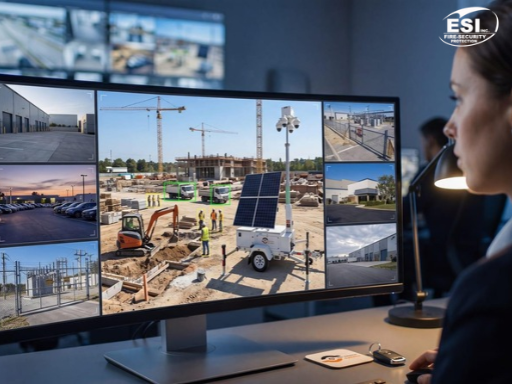
Proactive Video Monitoring: 7 Reasons Recording Isn’t Enough
Why Recording Crime Isn’t Enough: How Proactive Video Monitoring Helps Stop Threats
Your security cameras captured the entire incident.
You can see the truck pulling into the parking lot. You can watch someone cut through the fence, enter your equipment yard, and begin loading materials. You even have footage of the vehicle leaving.
There’s just one problem.
By the time anyone watches the recording, the equipment is gone.
This is one of the biggest weaknesses of traditional video surveillance. Cameras may provide valuable evidence after a crime, but recording an incident doesn’t necessarily prevent the damage.
For businesses with expensive equipment, outdoor storage, large properties, or limited after-hours staffing, that’s an important distinction.
Proactive video monitoring changes the role of security cameras. Instead of relying solely on recorded footage, it combines surveillance technology with trained monitoring personnel who can evaluate suspicious activity and take action while an incident is developing.
At ESI Fire & Security, we believe commercial security should do more than document losses. It should give businesses an opportunity to identify threats early and respond before a situation gets worse.
Here’s why that matters.
What Is Proactive Video Monitoring?
Proactive Video Monitoring (PVM) is a security service that uses video surveillance, analytics, and trained monitoring personnel to identify and evaluate potentially suspicious activity.
Rather than requiring someone at your business to constantly watch camera feeds, an appropriately configured monitoring system can generate alerts when activity meets established detection criteria.
Those alerts can be reviewed by monitoring personnel who determine whether the activity requires a response.
Depending on the situation and system configuration, that response may include a live audio warning, notification to designated contacts, or escalation to appropriate responders.
The goal is straightforward: identify concerning activity while there may still be time to intervene.
This is particularly valuable at properties where unauthorized activity can go unnoticed for hours.
1. Recording a Crime and Responding to a Crime Are Two Different Things
Traditional security cameras serve an important purpose.
They can help businesses investigate incidents, document property damage, review employee or visitor activity, and preserve evidence.
But a camera recording an empty construction site at 2:00 a.m. doesn’t necessarily mean anyone knows someone is there.
If the footage isn’t reviewed until the following morning, the business may already be dealing with stolen equipment, damaged property, or interrupted operations.
Proactive monitoring introduces an additional layer of security.
When the system identifies an event that meets its monitoring criteria, trained personnel can evaluate the video and determine whether intervention is appropriate.
That doesn’t mean every incident will be prevented.
It means the business has a potential response mechanism that traditional unattended recording doesn’t provide.
2. AI Analytics Can Help Identify Suspicious Activity Earlier
One of the advantages of modern commercial surveillance is the ability to use video analytics to identify defined events.
Depending on the technology, analytics can help detect people or vehicles entering restricted areas, crossing designated boundaries, or remaining in monitored locations.
Consider an equipment yard that closes at 6:00 p.m.
During business hours, employees and delivery vehicles may move throughout the property.
At midnight, someone entering a fenced storage area may require attention.
A properly configured analytics system can help distinguish between expected activity and events that warrant review.
However, AI isn’t perfect.
Animals, weather, shadows, environmental conditions, and normal operational activity can sometimes generate unwanted alerts. Detection performance also depends on camera placement, lighting, image quality, and configuration.
That’s why the combination of analytics and human review is important.
AI helps identify events. Trained monitoring personnel evaluate what those events mean.
3. Live Audio Warnings Can Help Deter Unwanted Activity
Imagine someone entering a restricted commercial property after hours.
Instead of quietly moving through the site, they hear a warning from a speaker:
“This property is under active video surveillance. You are not authorized to be here. Leave the property immediately.”
That changes the situation.
A live warning lets the individual know that their presence has been detected and that someone is responding.
For some situations, that may be enough to discourage further activity.
With ESI’s Proactive Video Monitoring solutions, live audio intervention can be incorporated where the site and equipment support it.
This can be particularly useful for construction sites, equipment yards, vacant properties, parking lots, and other locations with limited on-site personnel.
It’s important to understand that audio intervention is not a guarantee that someone will leave or that damage will be prevented.
But it provides a deterrence opportunity that silent recording alone cannot.
4. Proactive Monitoring Can Reduce Dependence on On-Site Security Personnel
Many businesses face a difficult decision when protecting property after hours.
Do they hire security guards?
Install more cameras?
Accept the risk of leaving the property unattended?
Traditional security guards can be appropriate for facilities that require physical patrols, access management, visitor interaction, or an immediate on-site presence.
But staffing a location around the clock can be expensive.
Proactive Video Monitoring offers another option for properties where remote surveillance and intervention can address important security risks.
Rather than placing personnel physically on-site, trained monitoring operators can evaluate relevant video events remotely.
For some businesses, this can provide a more cost-effective approach to monitoring defined areas.
However, remote monitoring does not perform every function of an on-site guard.
It cannot physically detain someone, inspect a damaged gate, escort a visitor, or conduct an in-person patrol.
The right solution depends on the property, the risks, and the responsibilities security personnel would need to perform.
5. Monitoring Is Especially Valuable When Nobody Is on the Property
Commercial properties are often most vulnerable when they’re unattended.
A construction site may be busy all day but empty overnight.
An equipment yard may have valuable machinery sitting behind a locked gate.
A distribution center may have fewer employees on-site during certain shifts.
A vacant building may go days without regular activity.
In each case, suspicious activity can occur without anyone immediately noticing.
Proactive monitoring helps address that gap by providing a process for reviewing selected video events outside normal operating hours.
For businesses that operate around the clock, monitoring can also supplement existing personnel by helping identify activity in areas that employees aren’t continuously watching.
The objective isn’t to replace every existing security measure.
It’s to improve visibility and response where gaps exist.
6. Mobile Security Trailers Bring Proactive Monitoring to Difficult Locations
Not every property has the infrastructure needed for permanent security cameras.
Construction sites change.
Temporary storage yards move.
Vacant properties may not have reliable electricity or internet service.
Remote industrial locations may have limited communications infrastructure.
This is where ESI’s Mobile Security Trailers can be particularly valuable.
Our trailers can be configured with elevated surveillance cameras, solar power, battery backup, remote connectivity, and video analytics.
When paired with Proactive Video Monitoring, they can support remote review and live intervention without requiring a traditional fixed-camera installation.
They’re useful for locations such as:
-
Construction sites and active jobsites
-
Equipment and material storage yards
-
Utility and energy projects
-
Vacant commercial properties
-
Large outdoor parking areas
-
Temporary industrial operations
-
Remote properties with limited infrastructure
Because the trailers are mobile, they can also be relocated as site conditions or security needs change.
For construction projects in particular, that flexibility can be valuable as work progresses and the areas requiring protection shift.
Need security coverage without installing permanent infrastructure? ESI can evaluate whether a Mobile Security Trailer with Proactive Video Monitoring is appropriate for your site.
7. Faster Awareness Can Support a Better Response
When an incident occurs, time matters.
Consider two situations.
In the first, a warehouse manager arrives Monday morning and discovers a damaged gate and missing materials.
The cameras captured the event on Saturday night, but nobody knew about it until two days later.
In the second, a monitored camera detects activity at the gate Saturday night. Monitoring personnel review the event and follow the established response procedures.
The outcome isn’t guaranteed in either case.
But the second scenario provides an opportunity to respond much sooner.
Depending on the monitoring arrangement, an event may result in a live audio warning, notification to management, or escalation to law enforcement or other responders when appropriate.
Early awareness can also help businesses document what occurred and coordinate follow-up actions.
That’s a meaningful improvement over discovering an incident only after the damage is done.
Traditional Security Cameras vs. Proactive Video Monitoring
Both approaches have value, but they serve different purposes.
| Feature | Traditional Security Cameras | Proactive Video Monitoring |
|---|---|---|
| Records surveillance footage | Yes | Yes, depending on system configuration |
| Provides video for investigations | Yes | Yes |
| Automatically identifies selected events | Only with supported analytics | Commonly uses analytics |
| Professional review of alerts | Not included by default | Yes, under the monitoring service |
| Live audio intervention | Not included by default | Available with supported equipment |
| After-hours event escalation | Requires additional systems or personnel | Can be included in monitoring protocols |
| Requires physical on-site security personnel | No | No |
| Guarantees crime prevention | No | No |
The difference isn’t simply the camera technology.
It’s what happens after the system identifies a potentially important event.
Traditional recording provides information.
Proactive monitoring adds a process for evaluating that information and responding when appropriate.
Does Proactive Video Monitoring Replace Your Existing Security Cameras?
Not necessarily.
One of the first things we evaluate at ESI is whether a customer’s existing surveillance equipment can support the desired monitoring capabilities.
Some cameras and video management systems can be incorporated into an updated security architecture.
Others may require additional analytics, new recording equipment, network improvements, or replacement cameras.
Compatibility depends on the manufacturer, model, software, connectivity, and monitoring requirements.
The goal should never be to replace equipment simply because a newer product exists.
If your current cameras provide useful coverage and can support the necessary integration, keeping them may be the most practical choice.
On the other hand, if cameras have poor nighttime visibility, significant blind spots, or unreliable connectivity, those issues should be addressed before introducing monitoring.
You can’t effectively monitor activity that your cameras cannot see.
What Types of Businesses Benefit Most From Proactive Video Monitoring?
Proactive monitoring can be valuable across many commercial and industrial environments, particularly where large areas, valuable assets, or limited staffing create security challenges.
Construction Sites
Construction sites often contain valuable equipment, tools, copper, materials, and machinery.
They also change constantly, making permanent security infrastructure difficult to maintain.
Mobile surveillance and proactive monitoring can help protect defined areas after crews leave for the day.
Warehouses and Distribution Centers
Warehouses may have multiple loading docks, exterior storage areas, employee entrances, and large parking lots.
Monitoring can help address selected after-hours security risks and supplement existing surveillance.
Equipment Yards
Equipment yards often contain valuable machinery and materials across large outdoor spaces.
Video analytics and remote monitoring can help identify activity in restricted areas when the property is closed.
Retail Centers and Parking Lots
Large commercial parking areas may experience trespassing, vandalism, unauthorized gatherings, or other unwanted activity after businesses close.
Appropriately designed monitoring can help property managers respond to selected events.
Vacant Commercial Properties
Vacant buildings can be difficult to supervise consistently.
Proactive monitoring can provide an additional layer of protection when regular on-site personnel aren’t available.
Utilities and Remote Industrial Sites
Remote facilities may have expensive equipment and limited on-site staffing.
Mobile surveillance, remote connectivity, and monitoring can help provide visibility at locations where conventional security infrastructure may be impractical.
What Should Businesses Look for in a Proactive Video Monitoring Provider?
Not all monitoring services operate the same way.
Before selecting a provider, ask how alerts are generated, who reviews them, and what happens when suspicious activity is identified.
Important questions include:
-
Is monitoring performed by trained personnel?
-
What hours are covered?
-
Are alerts reviewed before escalation?
-
Is live audio intervention available?
-
How are false alarms handled?
-
What happens when an incident requires further action?
-
Can the service work with existing cameras?
-
What reporting is provided after an event?
-
What happens during an internet or power outage?
-
Can monitoring procedures be customized for the property?
Businesses should also understand the limitations of the service.
A monitored camera system still depends on appropriate camera coverage, reliable equipment, connectivity, and clear response procedures.
The best results come from designing the entire solution around the property’s actual security needs.
Why ESI Takes a Different Approach to Commercial Security
At ESI Fire & Security, we don’t believe every business needs the same cameras, software, or monitoring arrangement.
A construction site with no permanent electricity has different needs from a distribution center with 100 existing cameras.
A vacant commercial building has different risks from a manufacturing facility operating around the clock.
That’s why we begin by understanding the property.
Where are the valuable assets?
Which areas are vulnerable after hours?
What surveillance equipment is already installed?
Does the property have reliable power and internet?
Are there areas that require active monitoring?
Would mobile security provide better coverage than a permanent installation?
From there, we can recommend an appropriate combination of commercial video surveillance, analytics, Proactive Video Monitoring, Mobile Security Trailers, access control, and other integrated security solutions.
ESI is headquartered in Texas and serves commercial customers nationwide.
Our goal is to provide security solutions that work for the property rather than forcing the property to fit a particular product.
Stop Relying on Security Footage After the Damage Is Done
Security cameras are valuable.
They help document incidents, support investigations, and provide visibility across commercial properties.
But if nobody is aware of suspicious activity until the next morning, the footage may only tell you what you’ve already lost.
Proactive Video Monitoring gives businesses an opportunity to take a different approach.
By combining surveillance technology, analytics, trained monitoring personnel, and appropriate intervention procedures, businesses can improve their ability to identify and respond to security events while they’re happening.
It doesn’t eliminate every risk.
But it can help close the gap between recording an incident and having an opportunity to do something about it.
Ready to move beyond recording crime?
Contact ESI Fire & Security to discuss Proactive Video Monitoring, evaluate your existing camera system, or request information about Mobile Security Trailers for your property.
ESI Fire & Security Protection is one of three Honeywell Platinum dealers in Texas and is backed by over 25 years of industry experience. As leaders in the industry, we provide cutting-edge commercial security solutions, including Mobile Security Trailers, Proactive Video Monitoring, Video Surveillance, Access Control, and Intrusion Detection. Our team is dedicated to delivering top-tier solutions tailored to meet your needs, ensuring peace of mind for businesses across Texas and nation wide. Contact ESI Fire & Security today to learn how our Mobile Security Trailers and Proactive Video Monitoring solutions can help improve jobsite security and prevent costly theft and vandalism.
Frequently Asked Questions
Proactive video monitoring is a commercial security service that combines surveillance cameras, video analytics, and trained monitoring personnel to identify and evaluate potentially suspicious activity. Depending on the equipment and service agreement, operators may issue live audio warnings or escalate incidents according to established procedures.
Traditional cameras primarily provide live video and recorded footage. Proactive video monitoring adds professional review of selected events and the ability to respond while suspicious activity is occurring.
Proactive monitoring may help deter theft by detecting suspicious activity early and allowing monitoring personnel to intervene. However, no security solution can guarantee that theft or property damage will be prevented.
Yes. Proactive monitoring can be configured for nighttime and after-hours protection. Effectiveness depends on camera placement, lighting, equipment capabilities, connectivity, and the monitoring arrangement.
Some existing commercial cameras can support proactive monitoring through compatible video management systems, analytics, and monitoring integrations. A security assessment can determine whether existing equipment is suitable or requires upgrades.
It can be more cost-effective for certain properties, particularly where remote monitoring can address defined security risks. However, on-site guards perform physical duties that remote monitoring cannot replace. Costs and capabilities should be compared based on the property’s requirements.
Yes. ESI Mobile Security Trailers can be configured with video surveillance, analytics, remote connectivity, and Proactive Video Monitoring. These solutions are particularly useful for construction sites, equipment yards, and temporary or remote commercial properties.
Remote monitoring requires a communications connection between the site and monitoring service. Depending on the equipment, this may use wired internet, cellular connectivity, or satellite connectivity. Recording and monitoring capabilities during outages depend on the system configuration.