
Integrated Security Systems: Why Your Cameras, Access Control & Alarms Should Work Together
Your cameras recorded it.
Your access control system logged it.
Your intrusion system sent an alarm.
The problem? They’re all in different places.
When commercial security systems operate independently, someone has to connect the dots. A manager gets an alarm notification, logs into another system to check a camera, pulls an access report from somewhere else and tries to determine what actually happened.
That’s a lot of work during the exact moment you need information quickly.
Integrated security systems are designed to change that.
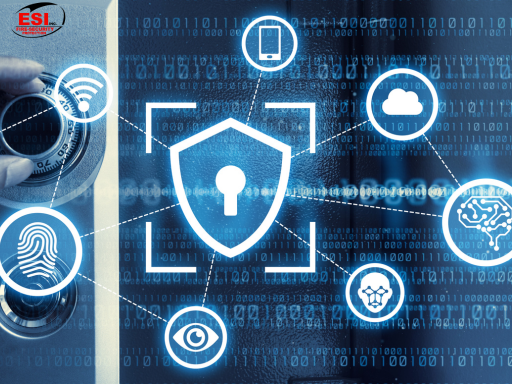
Instead of treating video surveillance, access control, intrusion detection and monitoring as separate pieces of equipment, integration allows those systems to share information and work together.
For a small business, that can make security easier to manage. For a warehouse, manufacturing plant, distribution center or company with multiple locations, it can completely change how the security operation works.
What Is an Integrated Security System?
An integrated security system connects two or more security technologies so information from one system can be used by another.
The most common components include:
- Video surveillance
- Access control
- Intrusion detection
- Alarm monitoring
- Video analytics
- Intercom systems
- Visitor management
- License plate recognition
- Proactive Video Monitoring
Integration can be relatively simple or much more advanced.
For example, a basic integration might connect an access control event with the camera covering that door.
A more advanced system might combine cameras, access control, intrusion alarms and analytics into a common management platform.
Honeywell’s Pro-Watch Integrated Security Suite is a good example. The current platform brings access control, video surveillance and intrusion detection into a common view and supports integrations with Honeywell and third-party technologies. Honeywell Buildings
The important part isn’t how many systems you can connect.
It’s whether connecting them solves a problem for your business.
The Problem With Standalone Commercial Security Systems
There’s nothing inherently wrong with a standalone camera or access control system.
The problem starts when a commercial property has several standalone systems and each one tells only part of the story.
Consider a warehouse with cameras, card access and an intrusion alarm.
At 11:42 p.m., a door opens.
The access control system may tell you which credential was used.
The camera system may show you who walked through the door.
The intrusion system may tell you whether that area was armed.
Individually, those are three pieces of information.
Together, they’re one event.
That’s the real value of commercial security integration: giving the people responsible for the property the information they need without forcing them to reconstruct every incident manually.
1. Connect Access Control Events With Video
This is one of the most useful security integrations for commercial facilities.
Access control tells you what credential was presented.
Video tells you what actually happened.
Suppose an employee badge is used at a restricted door at 10:37 p.m.
Looking only at an access report, you might see:
John Smith – Door 4 – Access Granted – 10:37 PM
That’s useful, but it doesn’t tell you everything.
Was John actually the person using the badge?
Did one person enter or did three people follow behind?
Was the door held open?
Was someone carrying equipment out?
When video and access control are integrated, the access event can be associated with the corresponding camera footage.
Now you’re not just looking at a line in a report. You can see the event.
For a facility manager investigating an incident, that can save a lot of time.
2. Give Alarm Events More Context
An alarm tells you something happened.
It doesn’t always tell you what happened.
That’s an important distinction.
A motion alarm at 2:00 a.m. could be a person walking through a restricted area. It could also be something that doesn’t require the same response.
Connecting alarm events with video can give security personnel more information to evaluate what is happening.
Instead of:
ALARM – NORTH YARD
you may be able to see the associated camera and determine what triggered the event.
That context becomes even more valuable when the property uses video analytics or Proactive Video Monitoring.
The objective isn’t to create more alerts.
It’s to create better information from the alerts that matter.
3. Make Your Cameras More Useful
Businesses sometimes think improving video surveillance means buying more cameras.
Not necessarily.
You may already have plenty of cameras.
The bigger question is what happens with the video they capture.
Are the cameras simply recording?
Can managers quickly find relevant footage?
Can video be associated with access events?
Can analytics identify defined activity?
Can an alarm bring up the appropriate camera?
Can someone respond to suspicious activity while it is happening?
A well-designed integrated system can make existing cameras more useful by connecting video with the rest of the security operation.
This is one reason we recommend evaluating an existing system before automatically replacing equipment.
If your current cameras are still performing well and are compatible with the new platform, there may be opportunities to preserve some of that investment.
4. Improve Response to Security Events
Think about what happens after an alarm at a large commercial facility.
Someone needs to answer several questions quickly:
Where did the event occur?
What triggered it?
Is someone actually there?
Which camera covers that area?
Was a credential used?
Does the situation require action?
With disconnected systems, finding those answers can require multiple applications, multiple logins and several minutes of searching.
Integration can put more of that information together.
Honeywell says its Pro-Watch Intelligent Command interface provides a common view of alarms, maps and video-related information to improve situational awareness and response to incidents.
For businesses, that’s the practical benefit.
The system should help your team understand an event—not make them work harder to investigate it.
5. Reduce the Number of Systems Your Team Has to Manage
This problem gets worse as businesses grow.
One location might have one camera platform.
Another has a different access control system.
A recently acquired property has completely different equipment.
The intrusion system has its own software.
The cameras have another login.
Someone keeps the access control password in a spreadsheet because only two people know how the system works.
Before long, managing security becomes a job in itself.
Integrated security can help consolidate how systems are monitored and managed.
That doesn’t always mean every device has to come from the same manufacturer. Some commercial platforms are designed to work with compatible third-party technologies. Honeywell, for example, specifically notes that Pro-Watch can integrate with access control, video and intrusion technologies from Honeywell and third-party manufacturers.
That’s important because most businesses aren’t starting with an empty building.
They already own equipment.
6. Make Investigations Faster
If you’ve ever had to find video from a specific incident, you know how quickly a “five-minute task” can turn into an hour.
Someone reports that an incident happened “sometime between 2:00 and 3:00.”
Now you have to identify the right camera, search the timeline, compare it against another system and figure out what happened.
Integrated systems can make investigations much more efficient by connecting events.
An access event gives you a timestamp.
An intrusion event gives you a timestamp.
Video provides visual verification.
Analytics may help narrow the search further.
Instead of hunting through hours of unrelated footage, the system can help point you toward the event you’re actually investigating.
That matters for more than theft.
Businesses may need video and access records for:
- Employee incidents
- Property damage
- Unauthorized access
- Vendor disputes
- Safety investigations
- Loading dock incidents
- After-hours activity
- Liability claims
Security technology has value long after installation when it helps management get answers quickly.
7. Build a Security System That Can Grow With Your Business
A security system shouldn’t have to be rebuilt every time your business adds a building.
That’s especially important for organizations with multiple locations.
A company may start with one facility in Houston and eventually add locations in Dallas, San Antonio or outside Texas.
Or a business may acquire another company and inherit completely different security equipment.
This is where system architecture matters.
A scalable commercial security platform can make it easier to add locations, users, doors, cameras and additional security technologies over time.
Honeywell describes Pro-Watch as a scalable platform with modular hardware and software options, including support for existing installed hardware as systems expand.
Planning for that growth at the beginning can prevent a company from ending up with five locations and five completely different security environments.
What Does Video Surveillance and Access Control Integration Actually Look Like?
This is easier to understand with real situations.
A Door Is Forced Open
Access control identifies a forced-door event.
The system associates the event with the camera covering that entrance.
Security personnel can see what’s happening and determine the appropriate response.
A Badge Is Used After Hours
A credential is used outside normal business hours.
The access event can be tied to corresponding video, allowing authorized personnel to verify who entered.
Someone Enters a Restricted Area
Video analytics or an intrusion device detects activity in a protected area.
The corresponding camera can help provide visual context.
An Employee Reports Missing Equipment
Management can review access events for the relevant area and compare them with video rather than searching every camera manually.
This is where integration stops being a technology buzzword.
It becomes a practical business tool.
Integrated Security vs. Having Multiple Security Systems
There’s an important difference between having several security systems and having an integrated security system.
A facility can have 100 cameras, 50 card readers and a commercial intrusion system and still have very little integration.
If none of those technologies communicate, you simply have three separate systems.
Integration means there is a deliberate relationship between them.
That might involve shared events, linked video, automated actions, centralized monitoring or a common management interface.
The goal isn’t necessarily to put absolutely everything on one screen.
The goal is to make the systems work together where doing so improves security or operations.
Can You Integrate an Existing Commercial Security System?
Often, yes.
And this is where choosing the right commercial security integrator becomes important.
Businesses frequently assume integration means ripping out everything they already own.
It doesn’t have to.
Depending on the manufacturer, age, condition and compatibility of your existing equipment, it may be possible to retain some cameras, readers, door hardware, cabling, network infrastructure or other components.
That’s why ESI recommends an assessment before deciding what needs to be replaced.
We want to know:
- What equipment do you currently have?
- Is it still supported?
- Is it reliable?
- Can it integrate with the proposed platform?
- Does it provide the performance you need?
- Is there a good business reason to keep it?
If the answer is yes, there may be no reason to replace it.
If the equipment is obsolete, unsupported or prevents you from accomplishing what you need, then replacing it may make more sense.
The goal isn’t to keep old equipment at all costs. It’s to avoid replacing good equipment for no reason.
What About Proactive Video Monitoring?
Integration becomes even more powerful when video is used proactively.
Traditional video surveillance is often reactive.
An incident occurs. Someone discovers it. Then they pull the video.
Proactive Video Monitoring takes a different approach.
AI-powered analytics can help identify defined activity, while trained monitoring personnel evaluate relevant events and can respond according to established protocols.
Depending on the site and system design, that may include live audio intervention or escalation when appropriate.
For a warehouse, equipment yard, parking lot, construction site or other property with significant after-hours exposure, this can change the role of the camera.
Instead of only asking:
“What happened last night?”
you can start asking:
“Can we identify suspicious activity while it’s happening?”
That’s a much different security strategy.
Does Every Business Need a Fully Integrated Security System?
No.
And anyone selling security should be willing to say that.
A small office with two doors and a handful of cameras doesn’t necessarily need the same platform as a manufacturing plant with 75 cameras, controlled production areas, multiple employee entrances and a large outdoor perimeter.
The security system should fit the operation.
Integration makes the most sense when disconnected systems are creating security gaps, slowing investigations, complicating management or limiting what the business wants to accomplish.
The technology should solve a problem.
If it doesn’t, adding another layer of software just because it’s available isn’t helping anyone.
How Much Do Integrated Security Systems Cost?
There isn’t a useful one-size-fits-all price for commercial security integration.
Cost depends on what you already have and what you’re trying to accomplish.
Some of the biggest factors include:
- Number of cameras
- Number of controlled doors
- Existing equipment compatibility
- Intrusion devices
- Software and licensing
- Network requirements
- Cabling
- Number of locations
- Video storage requirements
- Monitoring
- Analytics
- Integration complexity
- Condition of existing infrastructure
A business that already has compatible cameras, cabling and door hardware may have a very different project cost than a facility starting from scratch.
That’s another reason an onsite assessment is so valuable.
Before discussing what you need to buy, we should understand what you already own.
Why the Integrator Matters as Much as the Equipment
You can buy excellent cameras and still end up with a poor surveillance system.
You can buy a powerful access control platform and still have doors that aren’t configured correctly.
And you can purchase several high-end security technologies that don’t work well together.
The equipment is only part of the equation.
Commercial security integration requires someone to understand the property, network, cameras, access control, intrusion detection, monitoring requirements and the way the customer actually operates.
That’s the role of a security integrator.
At ESI Fire & Security, we’re not interested in adding technology simply to make a system bigger.
We want to know what you’re protecting, where your vulnerabilities are, what technology you already own and what you need the system to accomplish.
Then we can design around that.
Who Benefits Most From Integrated Security?
Integrated security systems can be especially valuable for operations with multiple security layers or larger properties, including:
- Warehouses
- Distribution centers
- Manufacturing facilities
- Commercial office buildings
- Equipment yards
- Logistics facilities
- Data centers
- Healthcare facilities
- Educational facilities
- Multi-site businesses
- Critical infrastructure
- Large commercial properties
The larger or more complex the operation becomes, the more valuable it can be to have systems sharing useful information.
How Do You Know If Your Current Security System Is Too Fragmented?
Here’s a simple test.
If an alarm happens tonight, how many systems does someone need to open to figure out what happened?
If the answer is three or four, there’s probably room for improvement.
Other warning signs include:
- Too many security logins
- Separate systems at every location
- Difficulty finding video
- No video associated with access events
- Old or unsupported equipment
- Multiple security vendors that don’t coordinate
- Managers can’t remotely access the information they need
- Cameras primarily get used after something happens
- Access reports require significant manual review
- Expanding the existing system is becoming difficult
- Nobody is quite sure how all the equipment works together
Those aren’t necessarily reasons to replace everything.
They’re reasons to evaluate the system as a whole.
Layered Security Still Matters
Integration doesn’t mean relying on one technology.
In fact, it’s the opposite.
A strong commercial security strategy typically uses multiple layers designed to perform different jobs.
CISA describes layered physical security as using multiple interdependent measures—including surveillance and access controls—so that if one protection measure fails, other measures continue to provide protection.
A camera can’t physically lock a door.
An access control system can’t see someone climbing a fence.
An intrusion sensor can’t necessarily tell you exactly what triggered it.
Each technology has a job.
The advantage comes when those technologies can support one another.
Your Security Systems Shouldn’t Operate Like Separate Departments
You wouldn’t intentionally build a business where accounting, operations and management couldn’t share information.
Yet that’s exactly how many commercial security systems have evolved.
One company installed the cameras.
Another installed the access control.
Someone else handles the alarm.
Years later, the business has plenty of security equipment but no real security ecosystem.
If that sounds familiar, the answer isn’t automatically more equipment.
It may be better integration.
ESI Fire & Security can evaluate your existing video surveillance, access control, intrusion detection and monitoring systems to determine where integration makes sense, what equipment may be worth keeping and where an upgrade could improve your overall security operation.
Headquartered in Texas and serving customers nationwide, ESI designs commercial security solutions around the needs of the facility—not around selling a predetermined equipment package.
If you’re managing cameras, access control and alarms separately, contact ESI Fire & Security for a security system assessment. Let’s see what your existing systems could do if they actually worked together.
ESI Fire & Security Protection is one of three Honeywell Platinum dealers in Texas and is backed by over 25 years of industry experience. As leaders in the industry, we provide cutting-edge commercial security solutions, including Mobile Security Trailers, Proactive Video Monitoring, Video Surveillance, Access Control, and Intrusion Detection. Our team is dedicated to delivering top-tier solutions tailored to meet your needs, ensuring peace of mind for businesses across Texas and nation wide. Contact ESI Fire & Security today to learn how our Mobile Security Trailers and Proactive Video Monitoring solutions can help improve jobsite security and prevent costly theft and vandalism.
Frequently Asked Questions
Yes. Compatible video surveillance and access control systems can be integrated so access events can be associated with corresponding camera footage. This can make it easier to verify entries and investigate incidents.
In many cases, yes. Whether existing equipment can be retained depends on its manufacturer, age, condition, compatibility and the capabilities required from the new system. An assessment should be performed before equipment is replaced.
Not always. Some commercial security platforms support compatible third-party equipment and integrations. Compatibility should be verified at the product and feature level before designing the system.
Yes, depending on the equipment and platform. Video associated with alarm events can provide additional context and help authorized personnel evaluate what triggered an alarm.
Integration can make it easier to connect access events with video, investigate incidents, manage security information and understand what happened at a controlled entrance.
Potentially. The cameras, analytics, connectivity, coverage and monitoring platform must be evaluated to determine the appropriate configuration.