
When Is a Mobile Security Trailer Better Than Fixed Cameras in the Mobile Security Trailer vs Fixed Cameras Debate?
Security technology has evolved rapidly, giving property owners and contractors more options than ever before. Two of the most common solutions are fixed security cameras and mobile security trailers. While both provide surveillance, they serve very different purposes. So when is a mobile security trailer actually the better option? Let’s break it down.
In the ongoing discussion of Mobile Security Trailer vs Fixed Cameras, understanding the distinct advantages of each option is crucial.
Mobile Security Trailer vs Fixed Cameras: Understanding Fixed Security Cameras
Fixed cameras are permanently installed systems mounted on buildings, poles, or structures. They are commonly used for:
-
Office buildings
-
Retail centers
-
Warehouses
-
Schools
-
Apartment complexes
These systems are connected to power and internet infrastructure and are designed for long-term, stationary coverage.
Fixed cameras work well when:
-
The perimeter does not change
-
Power and network access are available
-
The property layout remains consistent
However, they have limitations when used in temporary or evolving environments.
What Is a Mobile Security Trailer?
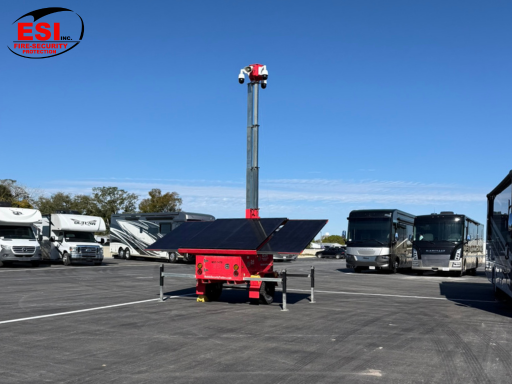
A mobile security trailer is a self-contained surveillance unit designed for temporary or high-risk locations.
Most include:
-
Elevated camera towers
-
AI-powered video monitoring
-
Remote live monitoring
-
Two-way audio deterrence
-
Solar power systems
-
Rapid deployment capabilities
Unlike fixed cameras, mobile security trailers are built for flexibility and mobility.
When a Mobile Security Trailer Is the Better Choice
Construction Sites With Changing Layouts
Construction sites are constantly evolving.
Materials move. Equipment shifts. Perimeters expand.
Fixed cameras quickly become misaligned with the changing jobsite environment.
A mobile security trailer can be repositioned as the project progresses, maintaining full coverage from groundbreaking to completion.
Locations Without Power or Internet
Many job sites and remote properties lack permanent utilities.
Installing fixed cameras may require:
-
Trenching
-
Electrical work
-
Network installation
-
Permits
-
Added labor costs
Mobile security trailers, especially solar-powered models, operate independently without requiring infrastructure installation.
Temporary Projects
If a project lasts 3–12 months, permanent camera installation may not make financial sense.
A mobile security trailer allows you to:
-
Deploy quickly
-
Protect the site
-
Remove the system when the project ends
No long-term infrastructure investment required.
High-Theft Risk Environments
Construction sites store:
-
Copper
-
HVAC units
-
Tools
-
Heavy machinery
-
Electrical components
These are high-value, easily resold items.
Mobile security trailers typically include AI video monitoring with live intervention, allowing operators to:
-
Detect suspicious activity
-
Issue live audio warnings
-
Contact law enforcement immediately
Traditional fixed systems often record incidents but may not intervene in real time.
Large, Open Perimeters
Fixed cameras mounted on buildings struggle to cover:
-
Wide-open lots
-
Equipment yards
-
Vacant land
-
New development sites
Mobile security trailers provide elevated visibility across large areas with fewer blind spots.
Cost Comparison: Installation vs Deployment
Fixed Cameras Often Require:
-
Electrical installation
-
Network cabling
-
Mounting hardware
-
Labor crews
-
Long-term maintenance
Mobile Security Trailers Offer:
-
Rapid setup
-
No trenching
-
No permanent mounting
-
Reduced upfront infrastructure costs
For temporary or changing sites, the cost efficiency often favors mobile solutions.
When Fixed Cameras Make More Sense
To be fair, fixed cameras are ideal when:
-
The building is permanent
-
Infrastructure is already installed
-
Coverage needs are predictable
-
Long-term ownership justifies installation
In these environments, fixed systems can provide stable, ongoing protection.
The Hybrid Approach
Many companies benefit from combining both solutions.
For example:
-
Fixed cameras protect the main facility
-
A mobile security trailer protects staging areas, overflow lots, or temporary expansion zones
This layered approach creates stronger coverage across the entire property.
Final Verdict: Which One Is Right for You?
A mobile security trailer is typically the better choice when:
-
The site is temporary
-
The layout changes frequently
-
Utilities are unavailable
-
Theft risk is high
-
Rapid deployment is needed
Fixed cameras remain strong for permanent structures with stable infrastructure.
If you are securing a construction site, large open yard, or temporary project, mobile surveillance often provides greater flexibility, visibility, and cost efficiency.